
Client
Client
Zofit AI
Zofit AI
Category
Category
AI Fitness Coach / iOS App
AI Fitness Coach / iOS App
Duration
Duration
6 Months
6 Months
Join Beta
Join Beta
Designing a trustworthy personal trainer
Designing a trustworthy personal trainer
Beta tested impact
Beta tested impact
5000+
5000+
Beta users
Beta users
64%
64%
Action success
Action success
73%
73%
7-Day retention
7-Day retention
Snapshot
Snapshot
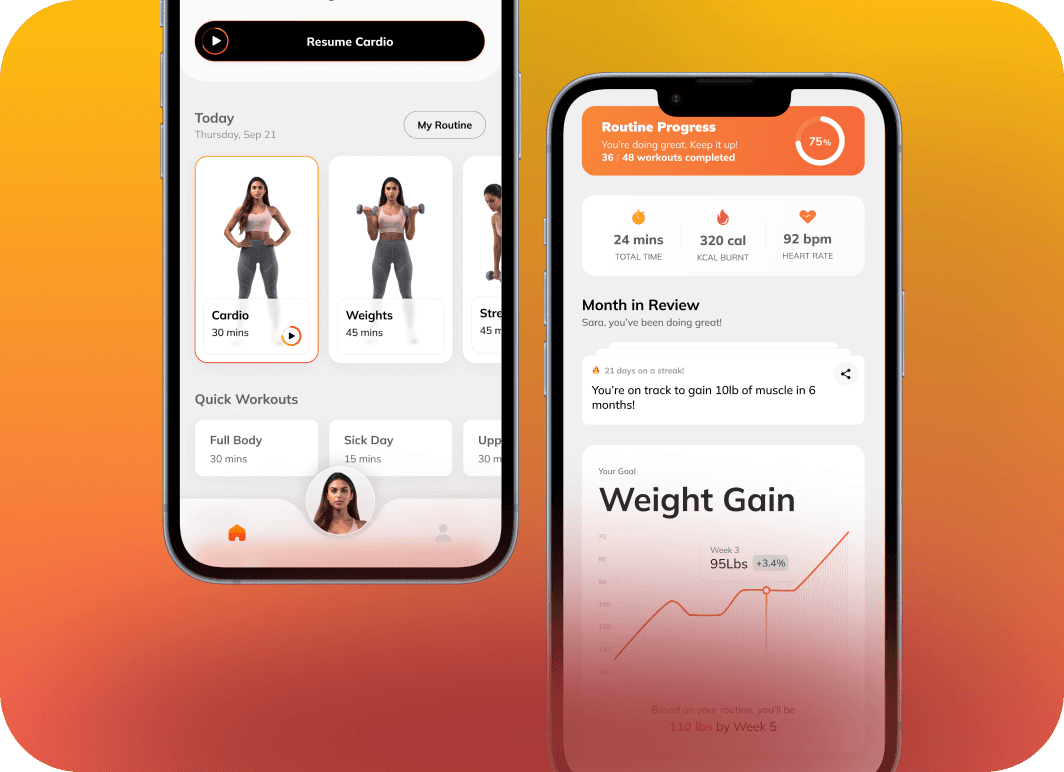
Meet Zo, an AI fitness coach that feels human, adaptive, and trustworthy.
It helps users stay consistent with home workouts by replacing generic plans with real-time, personalized feedback and guidance.
Meet Zo, an AI fitness coach that feels human, adaptive, and trustworthy.
It helps users stay consistent with home workouts by replacing generic plans with real-time, personalized feedback and guidance.
Problem
Problem
After the pandemic, more people started working out at home. But sticking with it was still hard. It wasn’t about a lack of tools. Workouts often felt generic and disconnected, and most apps just tracked progress instead of guiding you like a real trainer would.
After the pandemic, more people started working out at home. But sticking with it was still hard. It wasn’t about a lack of tools. Workouts often felt generic and disconnected, and most apps just tracked progress instead of guiding you like a real trainer would.
Eventually, user motivation dropped without
feedback or accountability. People wanted the convenience of an app, but the trust of a human coach.
Eventually, user motivation dropped without feedback or accountability. People wanted the convenience of an app, but the trust of a human coach.
Health-tech Scenario
Health-tech Scenario
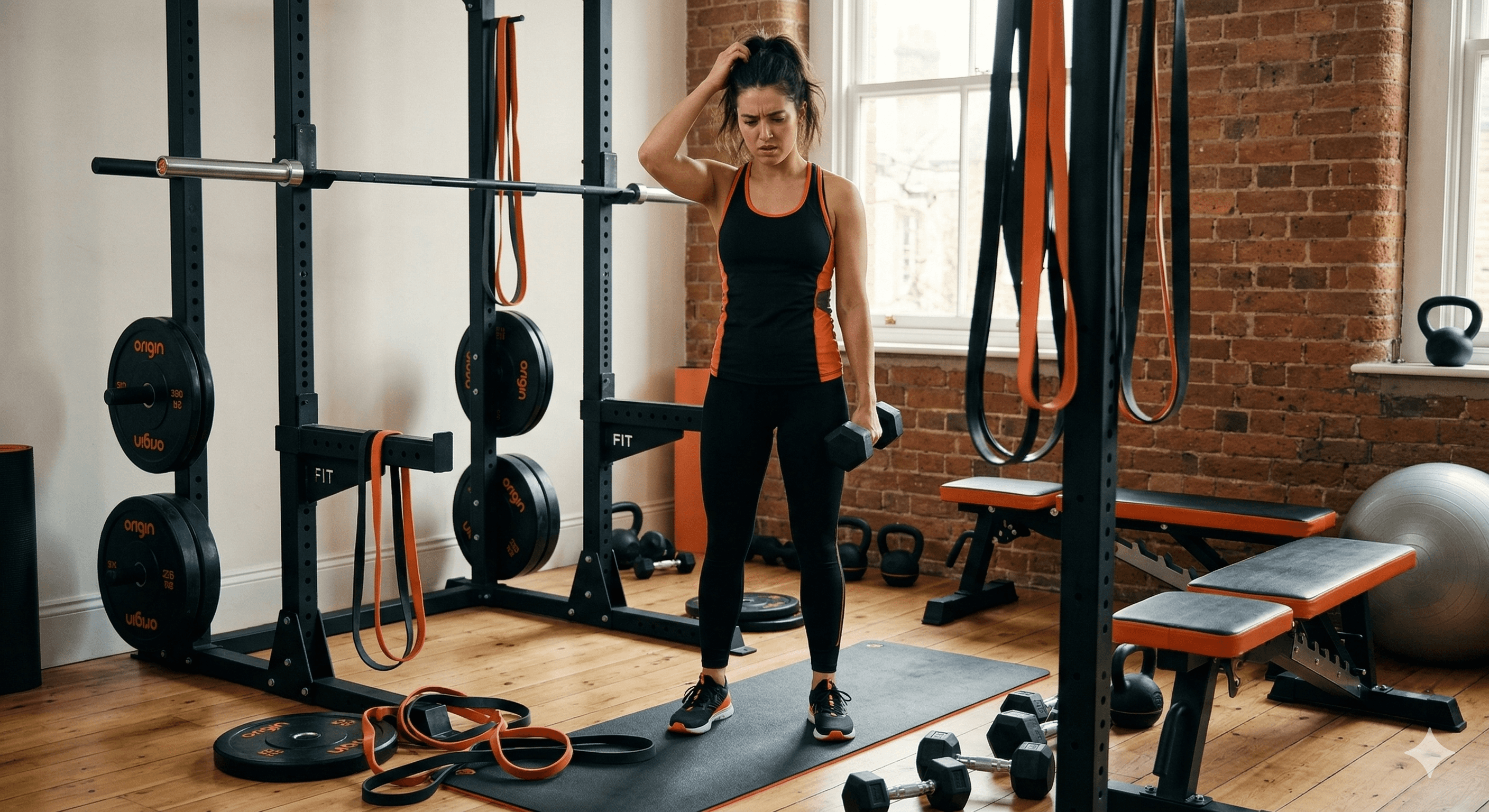
Most fitness apps act as trackers or content hubs resulting in generic and overwhelming experiences. Very few deliver a credible, human-like coaching experience that users can consistently rely on.
Most fitness apps act as trackers or content hubs resulting in generic and overwhelming experiences. Very few deliver a credible, human-like coaching experience that users can consistently rely on.
Phase 1
Phase 1
Discovery
Discovery
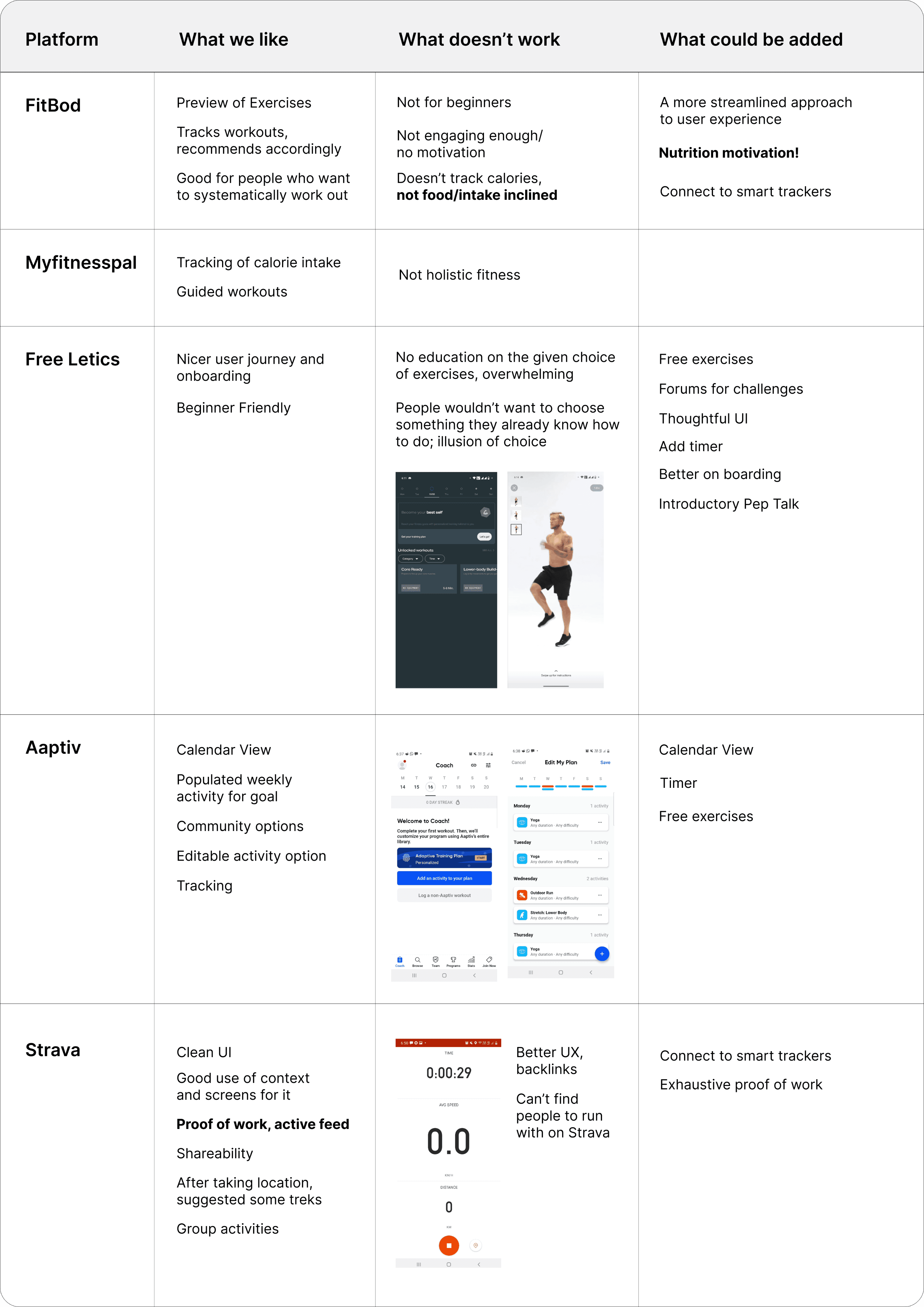
We conducted interviews and surveys with fitness enthusiasts, home workout users, and app seekers, alongside community insights from Reddit and forums.
We also ran internal workshops with fitness enthusiasts to uncover real experiences and the role of online content.
We conducted interviews and surveys with fitness enthusiasts, home workout users, and app seekers, alongside community insights from Reddit and forums.
We also ran internal workshops with fitness enthusiasts to uncover real experiences and the role of online content.
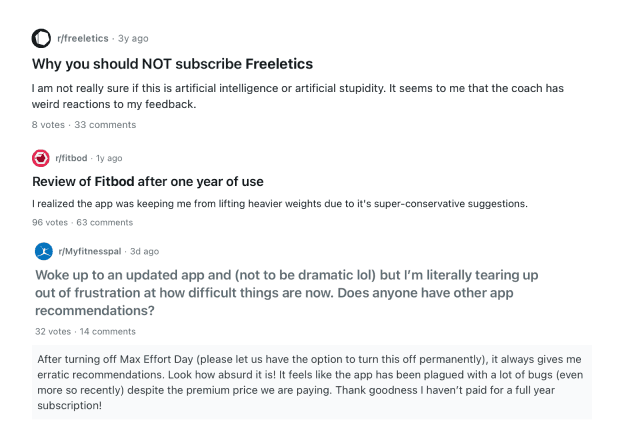
Trust in online content is volatile. Users needed a platform that could understand their body and goals.
Trust in online content is volatile. Users needed a platform that could understand their body and goals.
Current ‘personalisation’ scenario is fake. Apps claimed it, but delivered static workout templates.
Current ‘personalisation’ scenario is fake. Apps claimed it, but delivered static workout templates.
Motivation = feedback loop, not reminders. Users needed to see progress + get corrections.
Motivation = feedback loop, not reminders. Users needed to see progress + get corrections.
Users want trainers, not moms: guidance, not control.
Too many inputs caused cognitive overload.
Users want trainers, not moms: guidance, not control. Too many inputs caused cognitive overload.
Opportunity
Opportunity
Most fitness apps focus on content, expecting users to build workouts themselves often without understanding the exercises or terminology.
This leads to confusion, poor form, and even injuries causing many to quit altogether.
We identified gaps in four main facets of fitness apps and prioritised features based on segment with most user pain points.
Most fitness apps focus on content, expecting users to build workouts themselves often without understanding the exercises or terminology. This leads to confusion, poor form, and even injuries causing many to quit altogether.
We identified gaps in four main facets of fitness apps and prioritised features based on segment with most user pain points.
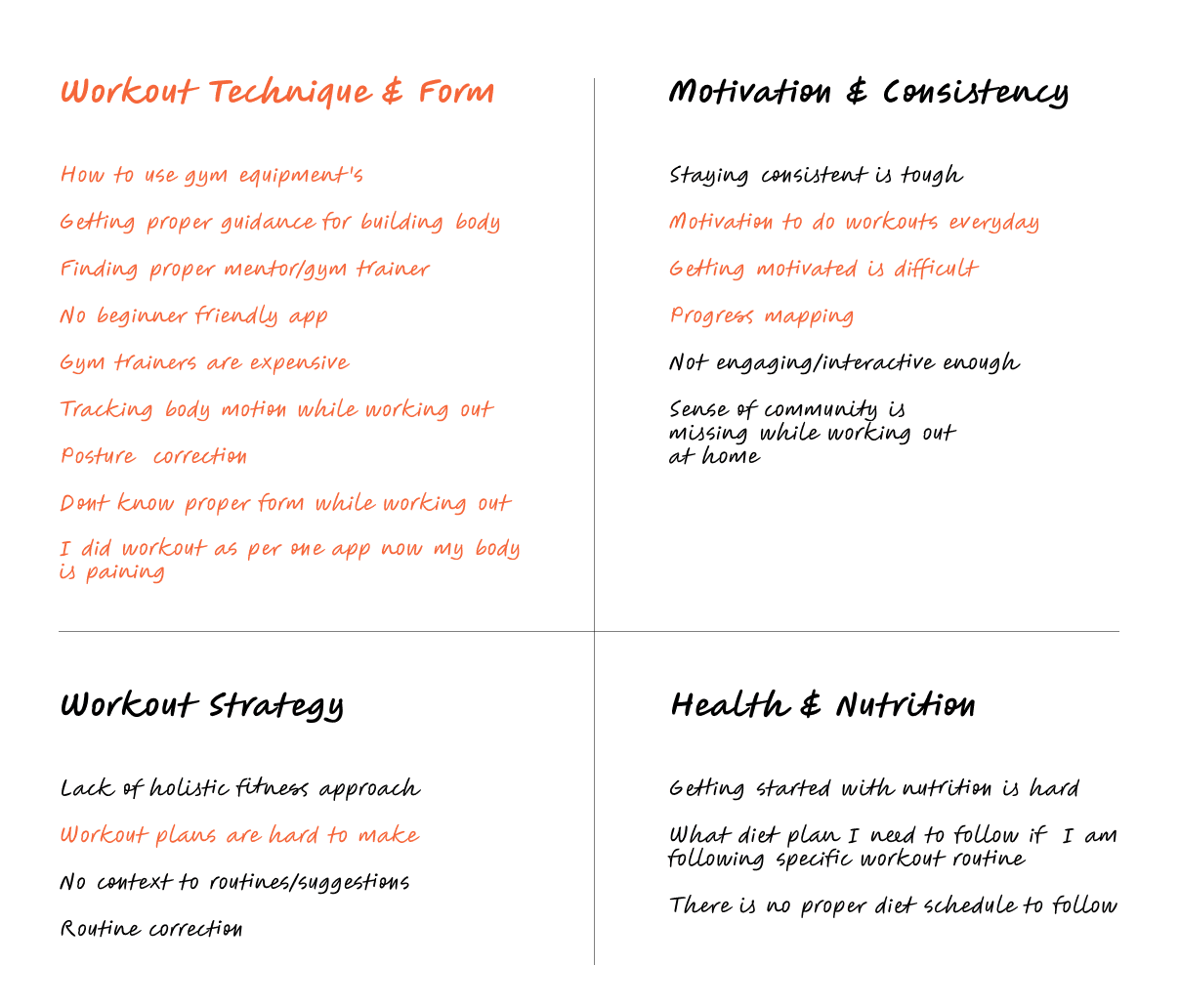
We set out to recognise priorities based on the project’s timeframe.
Inclined towards a more humane approach, we decided to curate an adaptive platform that interacts, guides, and motivates users, just like a real coach supporting you through your fitness journey.
We set out to recognise priorities based on the project’s timeframe. Inclined towards a more humane approach, we decided to curate an adaptive platform that interacts, guides, and motivates users, just like a real coach supporting you through your fitness journey.
Phase 2
Phase 2
Branding & Positioning
Branding & Positioning
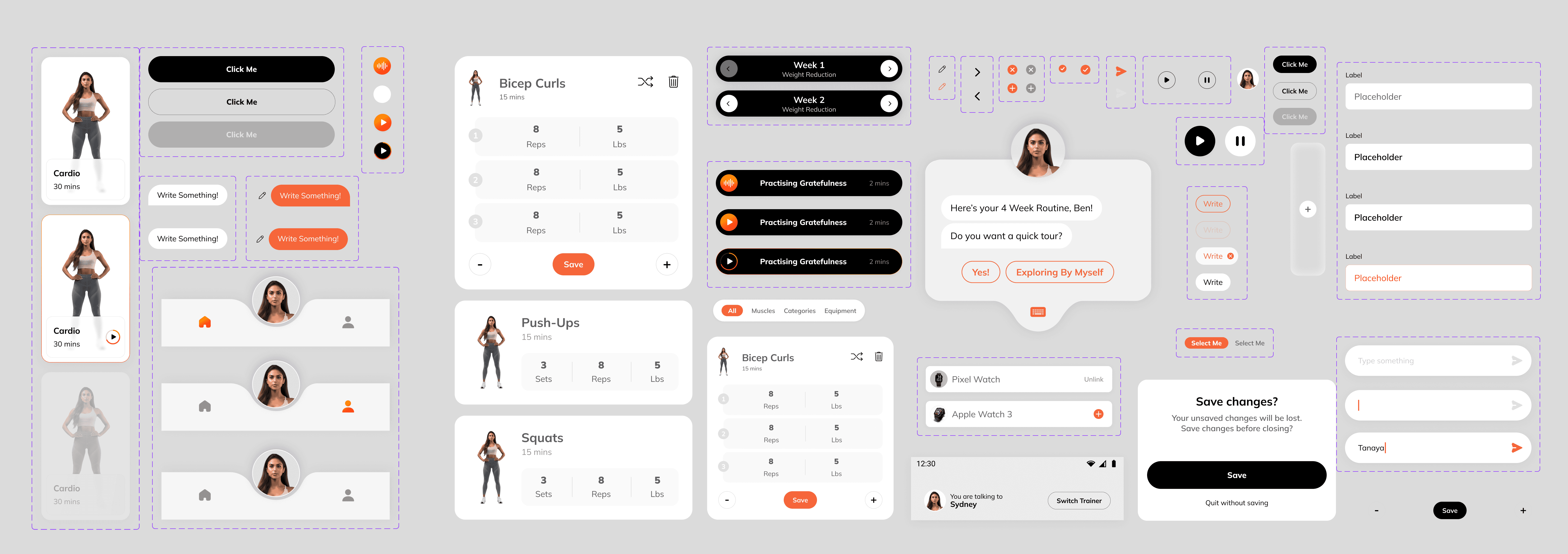
The branding and positioning centre around adaptive, human-like coaching leading to transformative journeys.
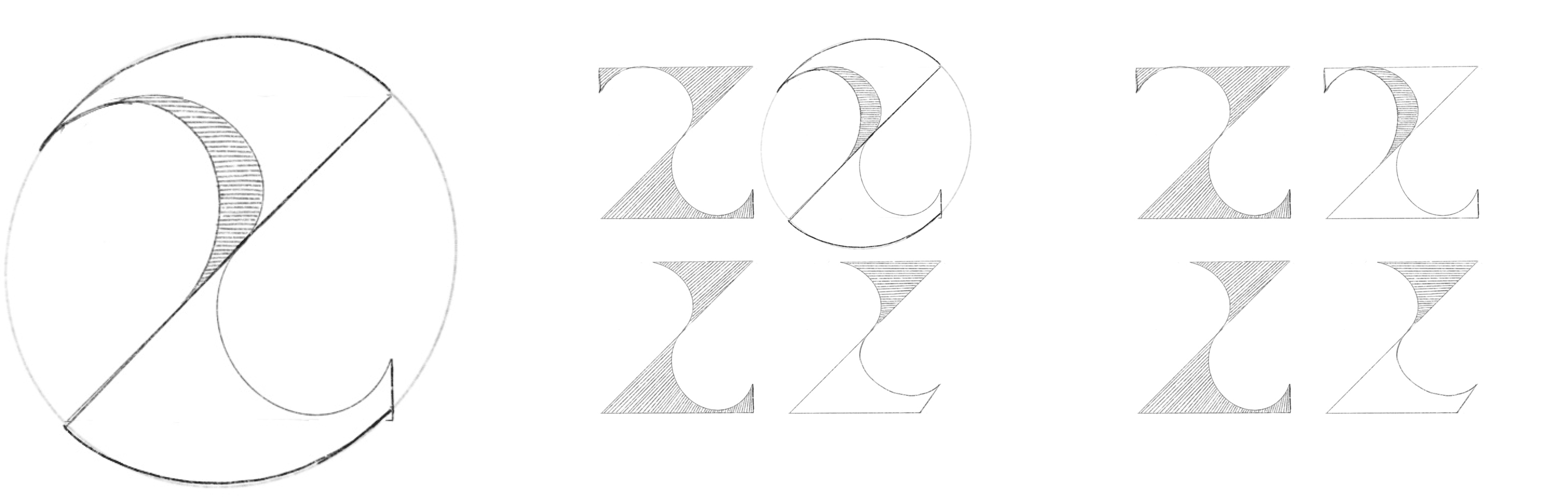
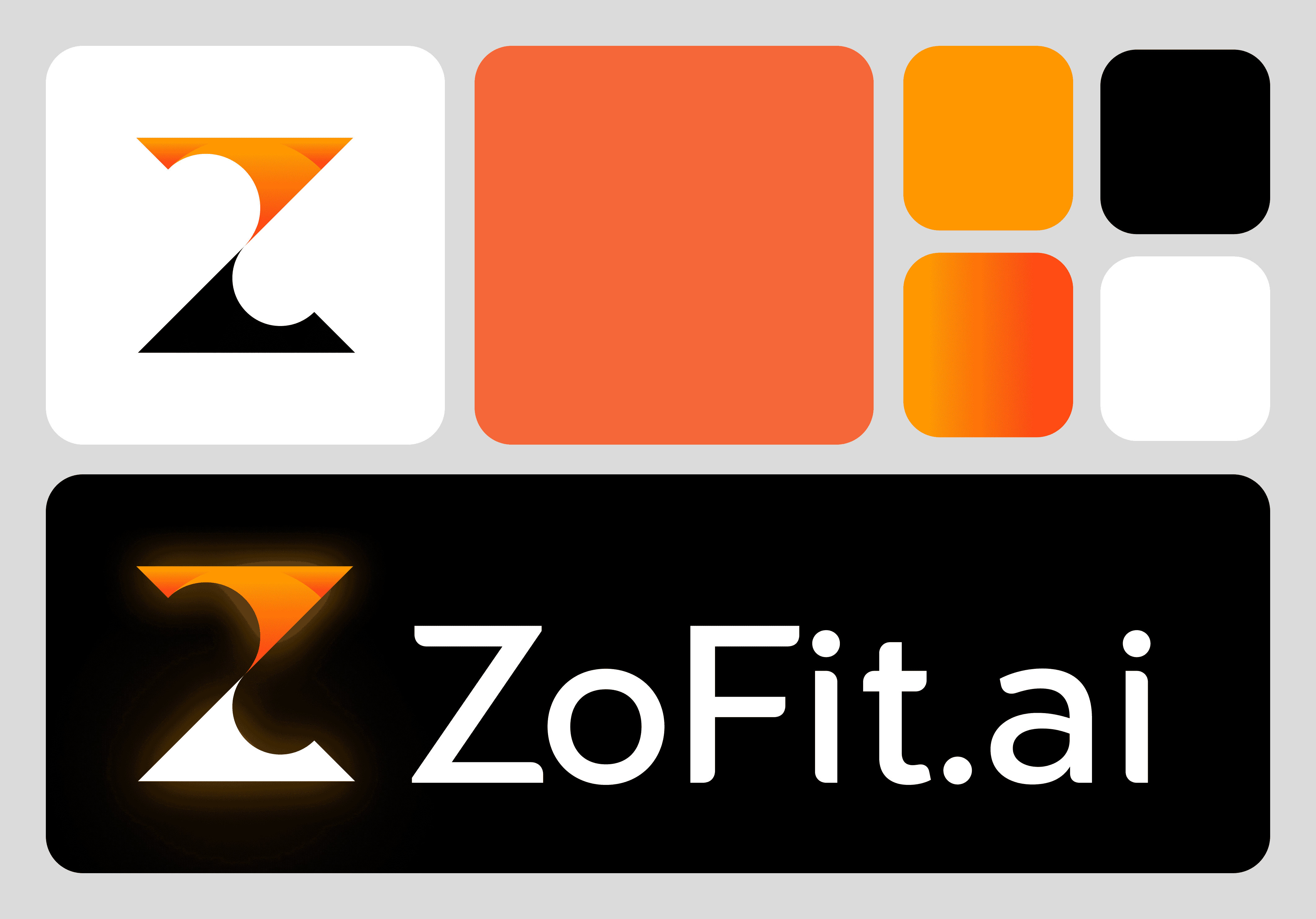
The logo’s fluid Z–O form is inspired by water, reflects continuous progress and personalisation, while its circular balance nods to holistic fitness.
A bold black-and-white foundation establishes trust and clarity, elevated by a vibrant orange gradient that signals energy and momentum.
The branding and positioning centre around adaptive, human-like coaching leading to transformative journeys.
The logo’s fluid Z–O form is inspired by water, reflects continuous progress and personalisation, while its circular balance nods to holistic fitness.
A bold black-and-white foundation establishes trust and clarity, elevated by a vibrant orange gradient that signals energy and momentum.
Phase 3
Phase 3
Defining the Experience
Defining the Experience
If we wanted people to feel like they had a real trainer in their pocket, it couldn’t feel like just another app telling them what to do. It had to guide them gently, without overwhelming them. It had to adapt to them—their pace, their energy, their off days instead of forcing them into a fixed routine.
So… we built Zo, a trainer you get to pick. A trainer you relate to and someone who talks to you like any human trainer would.
If we wanted people to feel like they had a real trainer in their pocket, it couldn’t feel like just another app telling them what to do. It had to guide them gently, without overwhelming them. It had to adapt to them—their pace, their energy, their off days instead of forcing them into a fixed routine.
So… we built Zo, a trainer you get to pick. A trainer you relate to and someone who talks to you like any human trainer would.
Building trust early
(With conversational onboarding)
Building trust early
(With conversational onboarding)
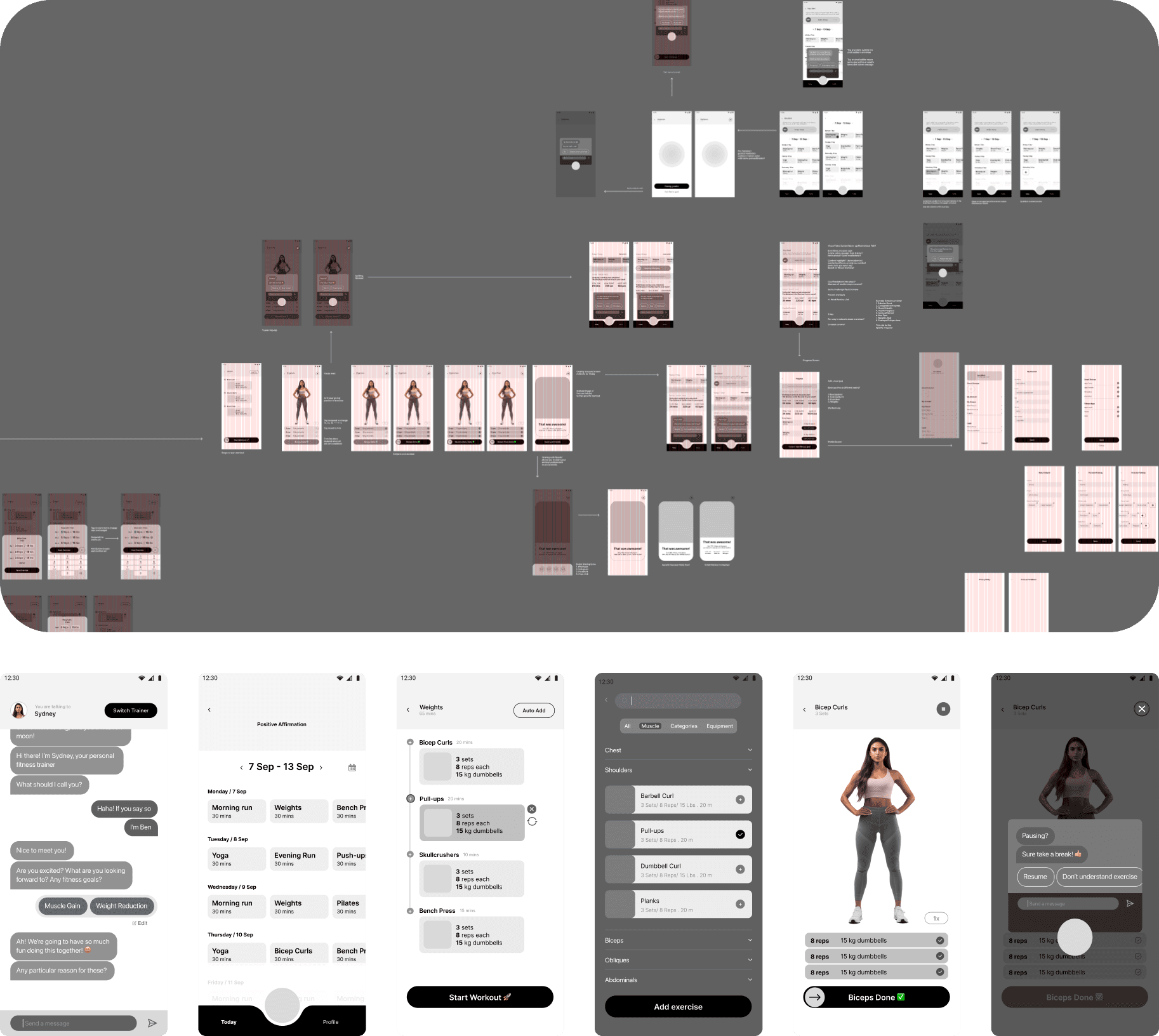
How would a real personal trainer onboard a new client? The idea was to mimic the same process. It did require us to part away with some sure shot user onboarding journeys but we had to trade-off quick, short and direct onboarding forms for a personalised conversation.
How would a real personal trainer onboard a new client? The idea was to mimic the same process. It did require us to part away with some sure shot user onboarding journeys but we had to trade-off quick, short and direct onboarding forms for a personalised conversation.
Initial usability testing / Rollback
Initial usability testing / Rollback
How would a real personal trainer onboard a new client? The idea was to mimic the same process. It did require us to part away with some sure shot user onboarding journeys but we had to trade-off quick, short and direct onboarding forms for a personalised conversation.
How would a real personal trainer onboard a new client? The idea was to mimic the same process. It did require us to part away with some sure shot user onboarding journeys but we had to trade-off quick, short and direct onboarding forms for a personalised conversation.
Starting the journey with a choice to pick your own trainer based on
personality did amazingly, almost 99% success on action.
Starting the journey with a choice to pick your own trainer based on
personality did amazingly, almost 99% success on action.
Test group was motivated to see their personalised routines.
Test group was motivated to see their personalised routines.
Drop-offs during onboarding due to long conversations and no exits.
Drop-offs during onboarding due to long conversations and no exits.
What we changed
What we changed
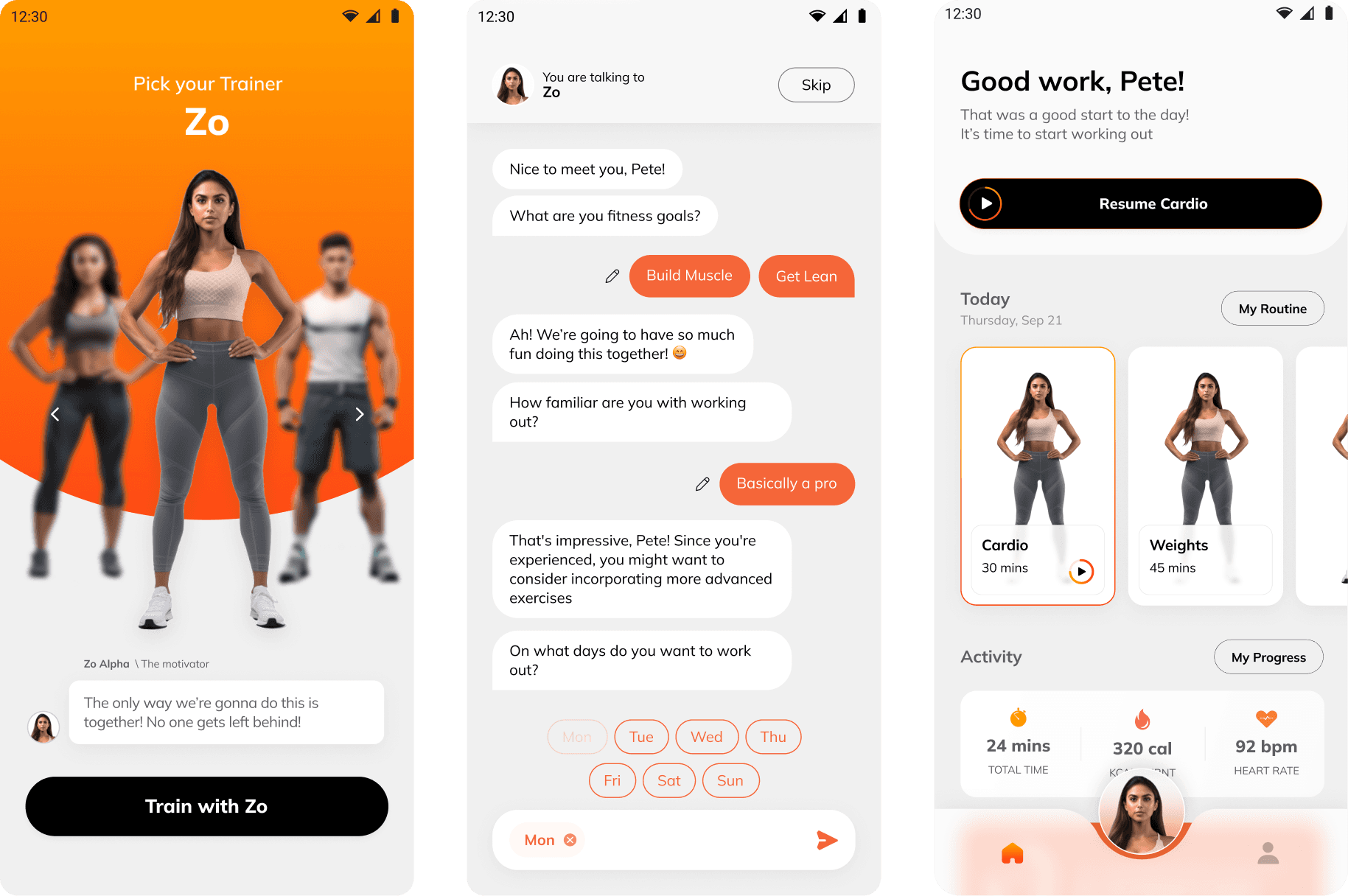
We made the onboarding much shorter, moving a big chunk of inputs to profile section. Without breaking the continuity, we simply introduced a skip button after the initial inputs were done to create a custom plan, which was dynamic to future inputs from the profile section updates.
We made the onboarding much shorter, moving a big chunk of inputs to profile section. Without breaking the continuity, we simply introduced a skip button after the initial inputs were done to create a custom plan, which was dynamic to future inputs from the profile section updates.
Quick selection pills to increase revert time and reduce friction.
Quick selection pills to increase revert time and reduce friction.
Option to skip parts of onboarding input to profile like adding smart
devices.
Option to skip parts of onboarding input to profile like adding smart
devices.
Users can share as much input as they want, and get a routine that
adapts instantly, always updating with changes through their profile.
Users can share as much input as they want, and get a routine that
adapts instantly, always updating with changes through their profile.
Phase 4
Personalised workout routines
Personalised workout routines
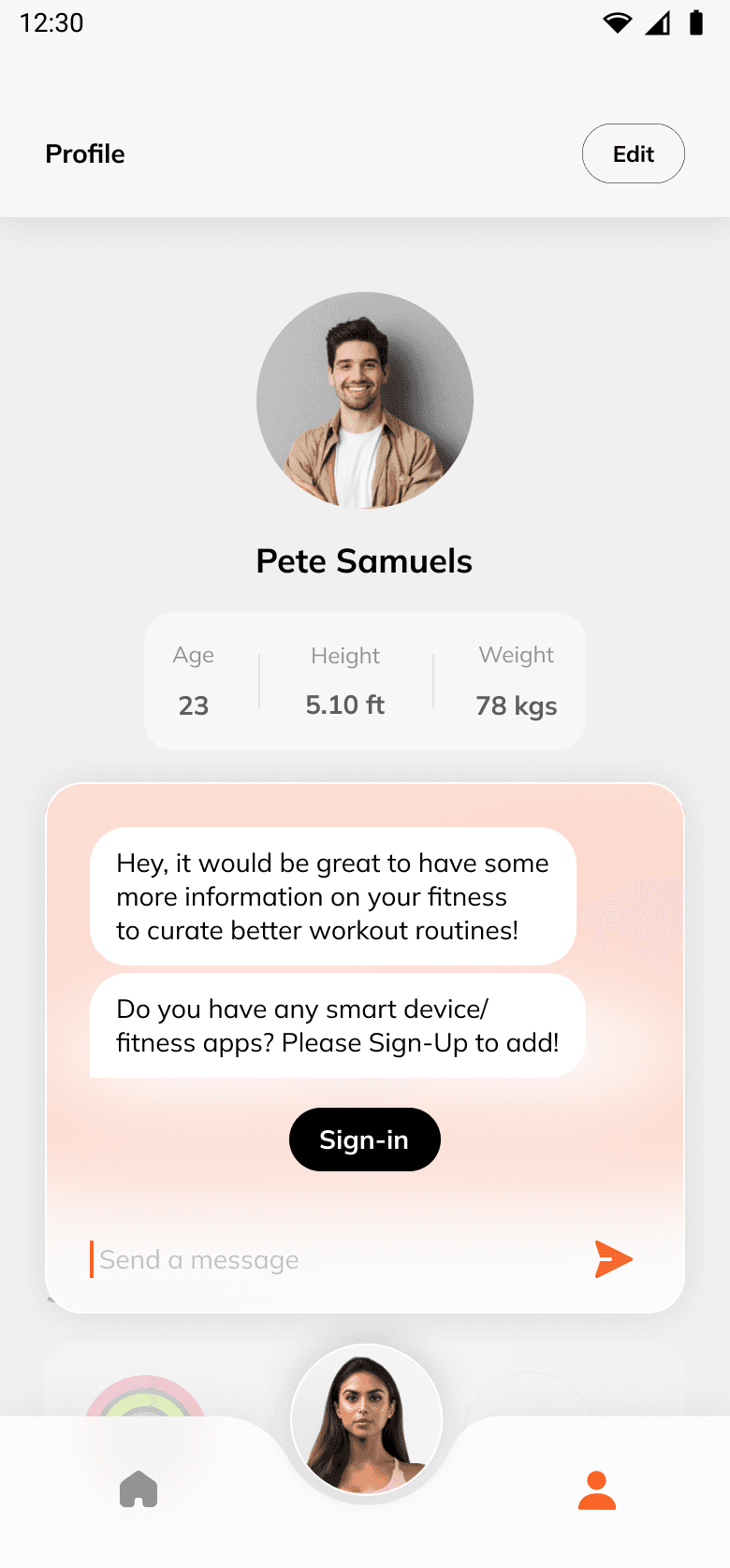
The workout routines were made using AI but what made them truly unique was the constant loop of data fed into the original algorithm from feedbacks after every workout, profile inputs and it was to be integrated further with posture data from posture control features.
Zo also accounted for the manual updates made to routines to see what’s really being liked and completed by the user.
The workout routines were made using AI but what made them truly unique was the constant loop of data fed into the original algorithm from feedbacks after every workout, profile inputs and it was to be integrated further with posture data from posture control features.
Zo also accounted for the manual updates made to routines to see what’s really being liked and completed by the user.
Zo talks
Zo talks
While curating workouts and updating them goes on in the background, Zo focused on building a relationship with the user through notifications, messages on the app and positive affirmations.
Zo’s conversational output is designed to reflect the real conversations or messages from human personal trainer, we worked with a team of professional fitness trainers to get this right as it was the most critical part of making Zo feel humane.
While curating workouts and updating them goes on in the background, Zo focused on building a relationship with the user through notifications, messages on the app and positive affirmations.
Zo’s conversational output is designed to reflect the real conversations or messages from human personal trainer, we worked with a team of professional fitness trainers to get this right as it was the most critical part of making Zo feel humane.
Progress tracking and proof of work
Progress tracking and proof of work
Beyond a focused progress screen, we made Zo the voice of celebration. After every workout, Zo shares progress cards highlighting wins and milestones, with options to share socially. These insights are powered by a blend of workout metrics and data from the user’s connected smart devices.
Beyond a focused progress screen, we made Zo the voice of celebration. After every workout, Zo shares progress cards highlighting wins and milestones, with options to share socially. These insights are powered by a blend of workout metrics and data from the user’s connected smart devices.
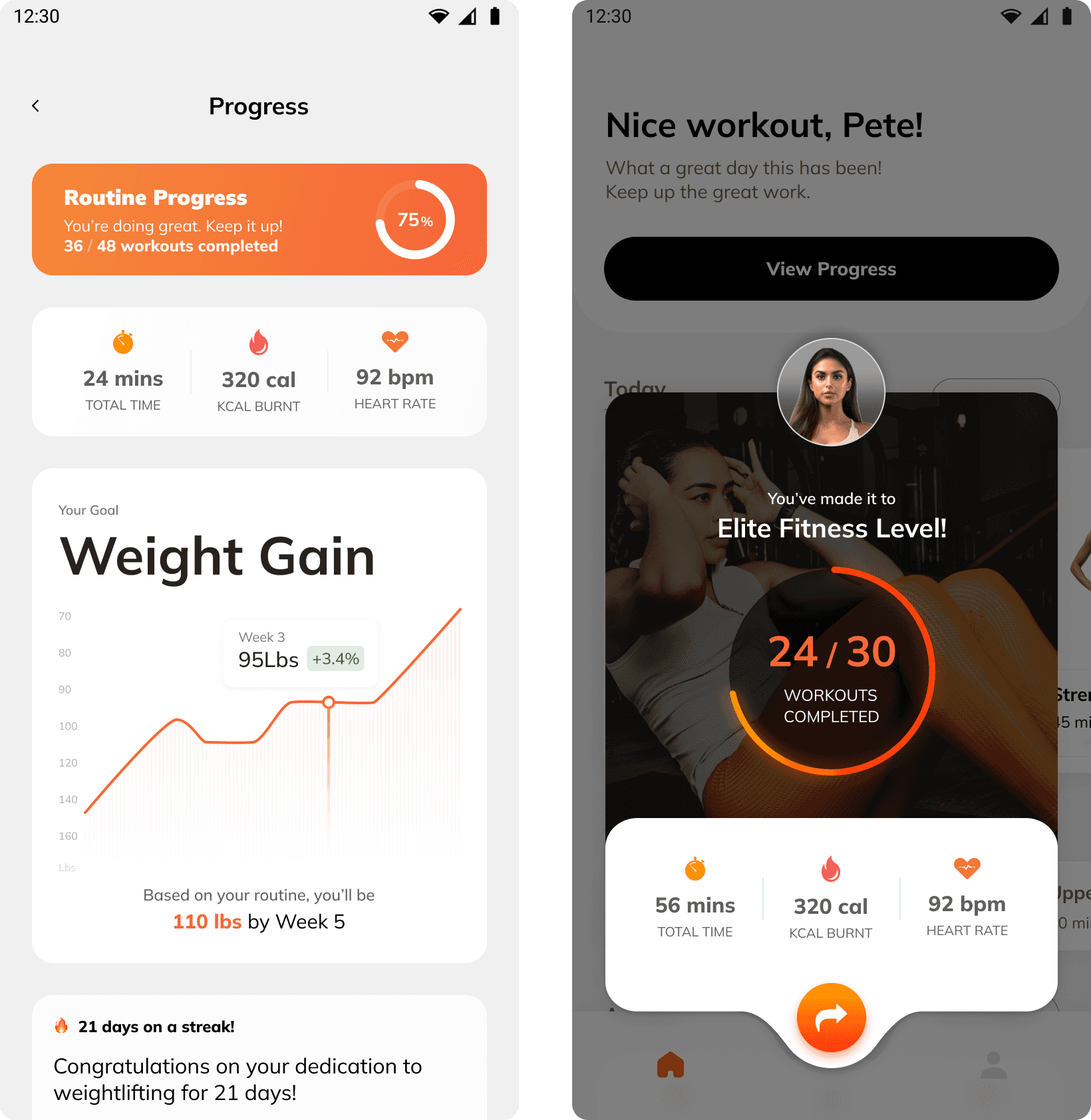
Reinforcing small wins builds habit loops.
Reinforcing small wins builds habit loops.
Work in progress
Work in progress
Posture correction model
Posture correction model
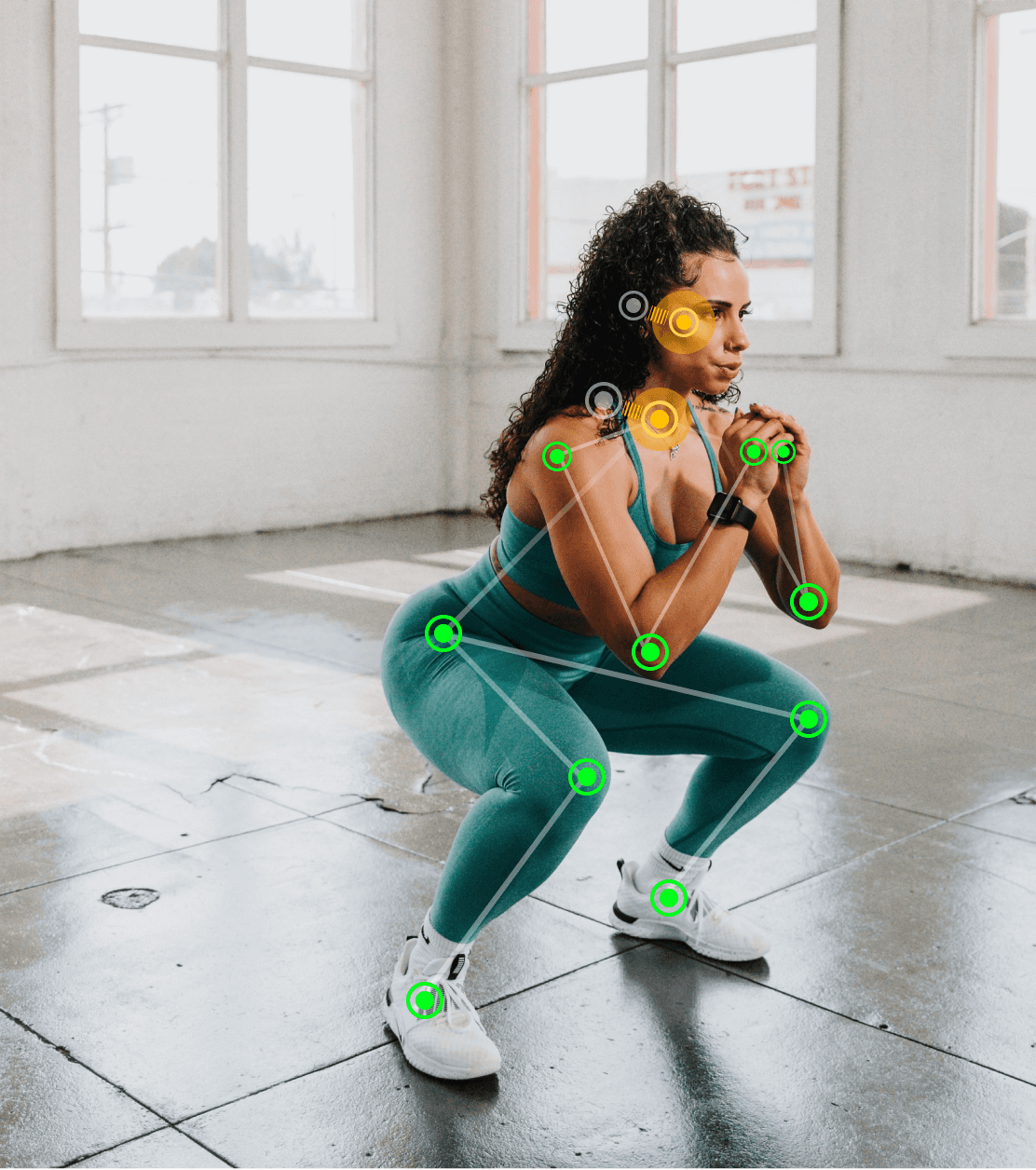
To address users’ fear of injury and skepticism around AI, we are working towards a real-time posture tracking with instant, trainer-like corrections.
By guiding users during the workout, the system is expected to build more trust and transform AI from a passive planner into a credible, hands-on coach. This will truly be the last piece of puzzle to make this a product the real thing.
To address users’ fear of injury and skepticism around AI, we are working towards a real-time posture tracking with instant, trainer-like corrections.
By guiding users during the workout, the system is expected to build more trust and transform AI from a passive planner into a credible, hands-on coach. This will truly be the last piece of puzzle to make this a product the real thing.
Go-to-Market Website
Go-to-Market Website
Interactive Zo
Interactive Zo
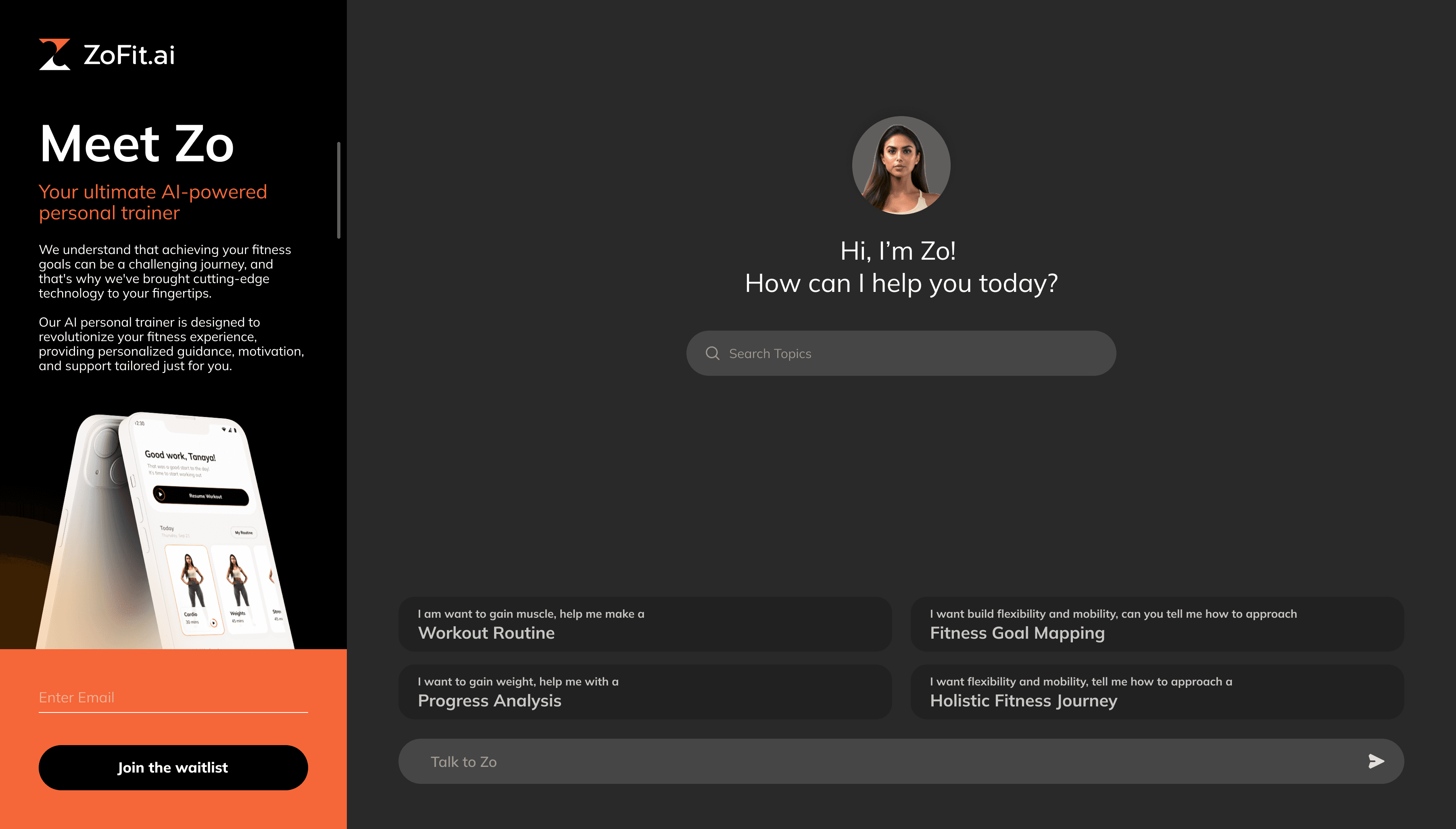
To start building early interest, we launched a simple waitlist page where people could meet Zo and interact with it right away. Instead of just reading about the product, users could try a light version of the experience by asking about workouts, goals, and guidance through a conversational interface.
It made the idea feel more real and approachable, while helping us understand how people naturally engaged with Zo even before the product was fully built.
To start building early interest, we launched a simple waitlist page where people could meet Zo and interact with it right away. Instead of just reading about the product, users could try a light version of the experience by asking about workouts, goals, and guidance through a conversational interface.
It made the idea feel more real and approachable, while helping us understand how people naturally engaged with Zo even before the product was fully built.
Reflection
Reflection
This project reinforced that trust matters more than intelligence if users don’t trust it, nothing else matters. I also realized that personalization is a feeling shaped by responsiveness, not inputs, and that motivation comes from progress and feedback, not reminders.
Most importantly, choosing simplicity by cutting features made the experience clearer and easier to adopt.
This project reinforced that trust matters more than intelligence if users don’t trust it, nothing else matters.
I also realized that personalization is a feeling shaped by responsiveness, not inputs, and that motivation comes from progress and feedback, not reminders.
Most importantly, choosing simplicity by cutting features made the experience clearer and easier to adopt.
What I could’ve done better
What I could’ve done better
We tested early ideas much later using low-fidelity wireframes, which in hindsight led us slightly off track and cost us about two weeks. We should have validated the approach much earlier.
Next time, especially for complex products, I’d validate ideas much earlier through simple sketches, role play, and small focus groups to understand if they truly feel intuitive or unintentionally confusing before investing in flows.
We tested early ideas much later using low-fidelity wireframes, which in hindsight led us slightly off track and cost us about two weeks. We should have validated the approach much earlier.
Next time, especially for complex products, I’d validate ideas much earlier through simple sketches, role play, and small focus groups to understand if they truly feel intuitive or unintentionally confusing before investing in flows.
Go back to all



More projects
More projects
Check out some of my favorite & most recent projects.
Check out some of my favorite & most recent projects.